 Interface Converters
 Power & Data Isolators
 GSM Devices
 Ethernet Converters
 Exclusive Innovations
 Data Loggers
 Controller Boards
 RFID Readers

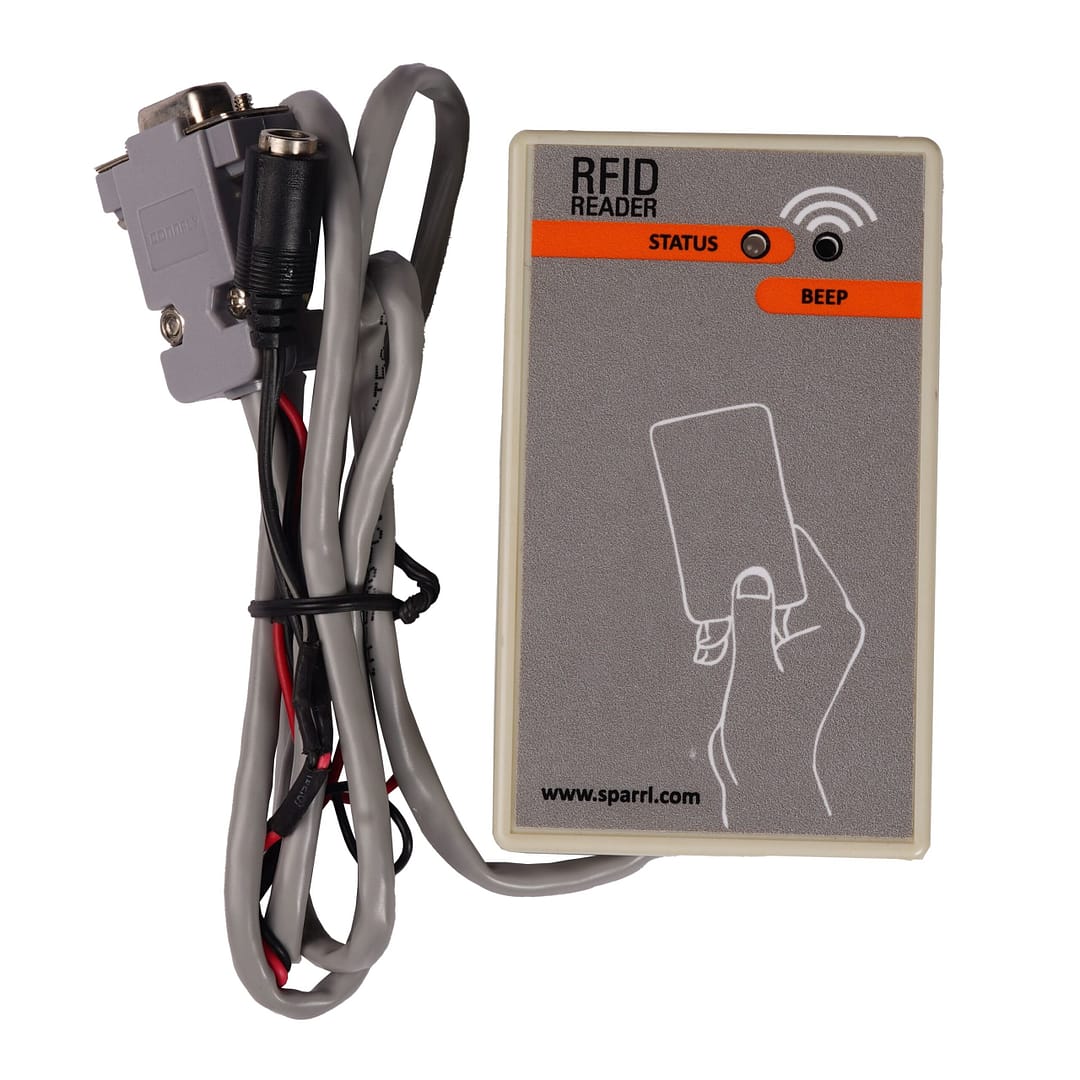
Card-based access control and asset tracking both come down to the same basic mechanism: a tag holds an ID, and a reader picks that ID up without physical contact. The part that actually determines whether a system works for your use case is the RFID reader — its frequency, read range, and how it talks to the rest of your system.
How an RFID reader actually works
An RFID reader generates a radio-frequency field. A passive tag in range draws power from that field and reflects back its stored ID. The reader decodes that reflection into a card/tag number, which it then passes on — typically over RS232, RS485, Wiegand, or USB — to a controller, PC, or access-control panel. No battery in the tag, no line-of-sight requirement (unlike a barcode), and reads happen in milliseconds.
125 kHz vs 13.56 MHz: the choice that matters most
125 kHz (low frequency)
The older, simpler standard. Cheap tags, short read range (a few centimetres to tens of centimetres), no data security on the tag itself — it just broadcasts a fixed ID. Still widely used for basic access control where cost matters more than security.
13.56 MHz (Mifare / high frequency)
Supports encrypted data storage on the tag itself, not just an ID broadcast — used for applications that need to store more than a card number (employee data, access levels, stored value). This is the standard behind most modern access cards and transit cards.
If your requirement is “does this badge belong to someone with access,” either works. If you need to store or update data on the card itself, 13.56 MHz/Mifare is the only real option.
Matching the interface to your system
- Wiegand — the standard interface for most commercial access-control panels; use this if you’re integrating with existing access-control hardware
- RS232/RS485 — for integrating a reader directly with a PLC, PC application, or a serial-based system (and worth isolating per our isolation guide if it’s on a long run)
- USB — simplest for a PC-based enrollment station or standalone application
Beyond access control: asset tracking
The same reader technology tracks tools, equipment, or inventory — tag the asset, place readers at chokepoints (a tool crib, a dock door, a storage rack), and log every read with a timestamp. It’s the same hardware decision (frequency, interface) with a different application layered on top.
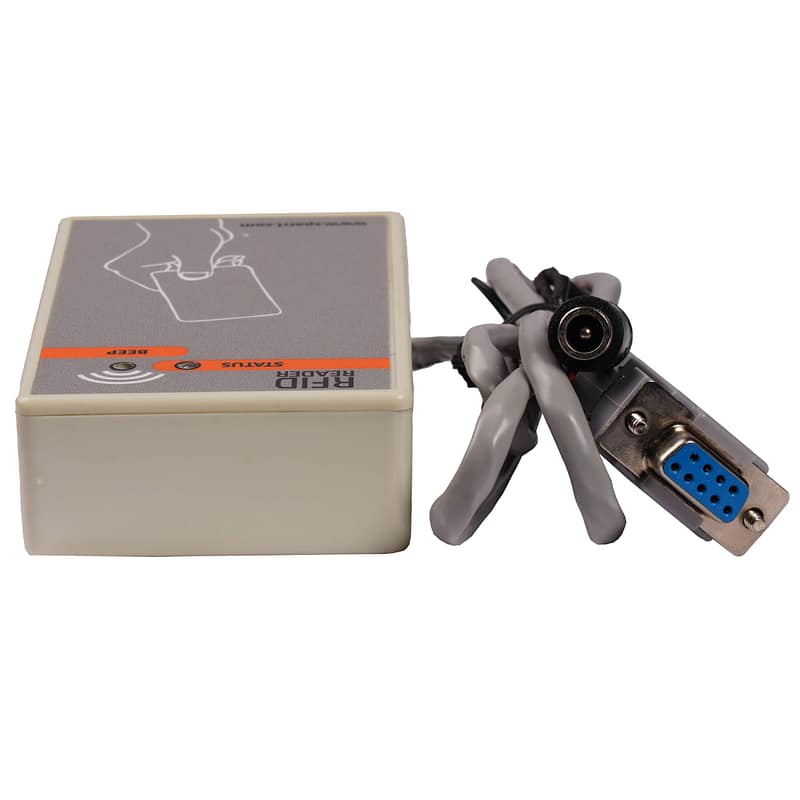
Sparr’s RFID Reader (Mifare, 13.56 MHz) and our broader RFID Readers range cover both 125 kHz and 13.56 MHz options across Wiegand, RS232, and module form factors.
Not sure which frequency or interface fits your access-control panel or PLC? Get in touch and we’ll match the reader to your system before you order.