 Interface Converters
 Power & Data Isolators
 GSM Devices
 Ethernet Converters
 Exclusive Innovations
 Data Loggers
 Controller Boards
 RFID Readers

Most industrial equipment still talks over RS232 — but RS232 was never built for distance. Its single-ended signalling starts degrading past about 15 metres, which is a problem the moment your PLC, meter, or PC needs to reach a device on the other side of a plant floor. An RS232 to RS485 converter solves this by translating that short-range point-to-point signal into RS485’s differential, multi-drop format — good for up to 1200 metres and up to 32 devices on a single pair.
This guide covers what actually matters when picking one for a real industrial installation, not just a datasheet comparison.
Why RS232 alone doesn’t scale
RS232 is a single-ended standard: one signal wire referenced to a shared ground. That makes it cheap and simple, but vulnerable to two things industrial environments have in abundance — distance-related voltage drop and electrical noise. RS485 fixes both by using a differential pair (A/B) that carries the signal as a voltage difference, which noise affects identically on both wires and therefore cancels out.
A converter sits between the two: your existing RS232 device on one side, an RS485 network (often a full Modbus RTU bus) on the other.
What to check before you buy
1. Isolation
If the converter shares grounds between the RS232 and RS485 sides, a ground-potential difference between two ends of a factory can push fault current straight through the converter — and sometimes through the equipment on both ends. Look for a converter with genuine galvanic isolation on the RS485 side, not just a marketing label. (We cover why this matters more broadly in our isolation guide.)
2. Multi-drop vs point-to-point
If you only need to bridge one RS232 device to one RS485 device, any basic converter works. If you’re building a bus with multiple RS485 devices — common in Modbus RTU networks — confirm the converter is rated to drive the full multi-drop bus, not just a single point-to-point link.
3. Auto direction control
RS485 is half-duplex — only one device can transmit at a time. A converter with automatic RTS/direction control removes a whole category of wiring and firmware bugs versus one that expects your software to toggle direction manually.
4. Baud rate range and power
Confirm the converter’s supported baud rates cover your device (most industrial gear runs 9600–115200 bps), and check whether it’s USB/DC powered or needs a separate 12V adaptor — this affects panel layout more than people expect.
A quick spec checklist
- Isolation voltage rating (look for 1000V+ on the RS485 side for real protection)
- Supported baud rate range
- Multi-drop rated (device count on the bus)
- Auto or manual direction control
- Operating temperature range if it’s going in an unconditioned panel
- DIN-rail or standalone enclosure, depending on where it’s mounted
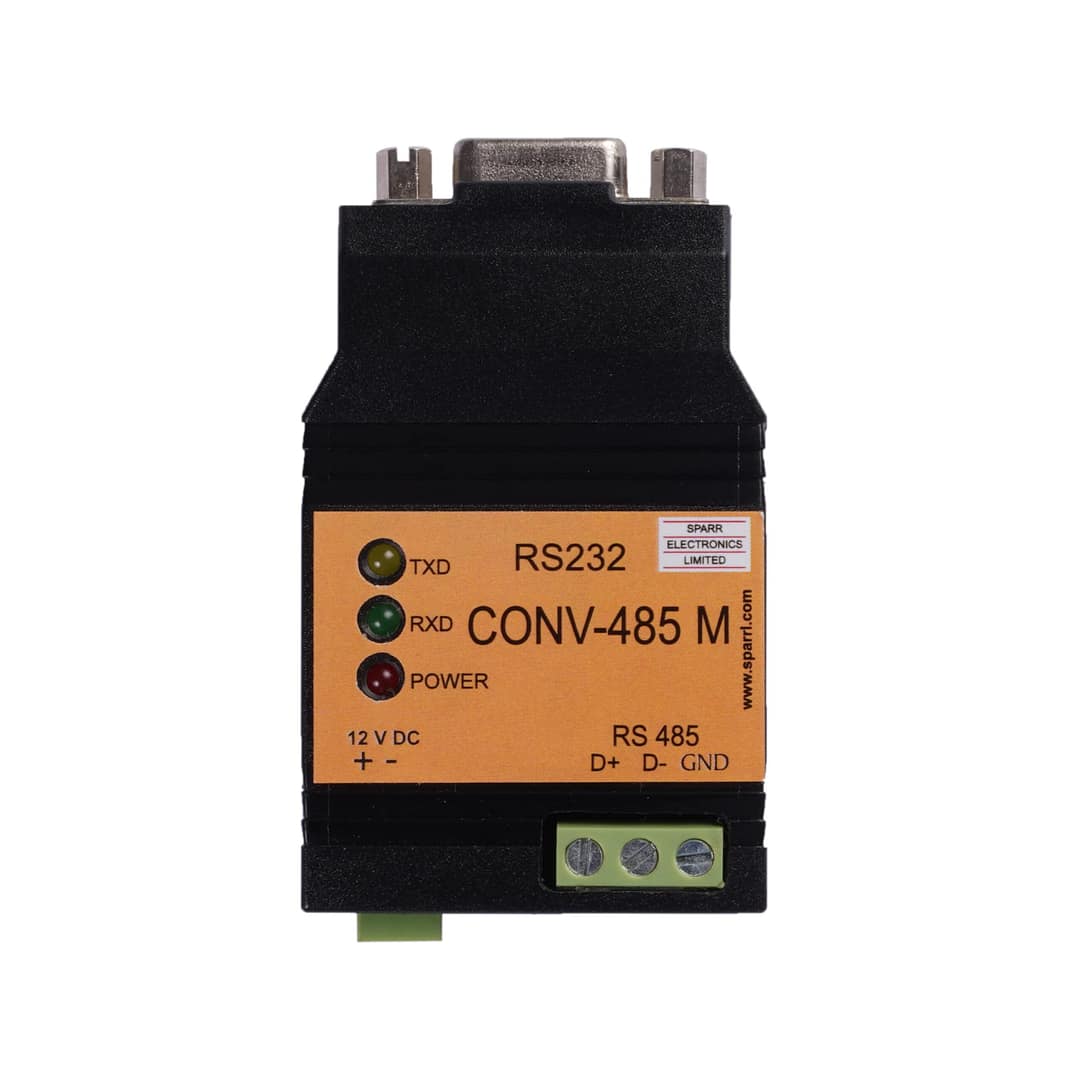
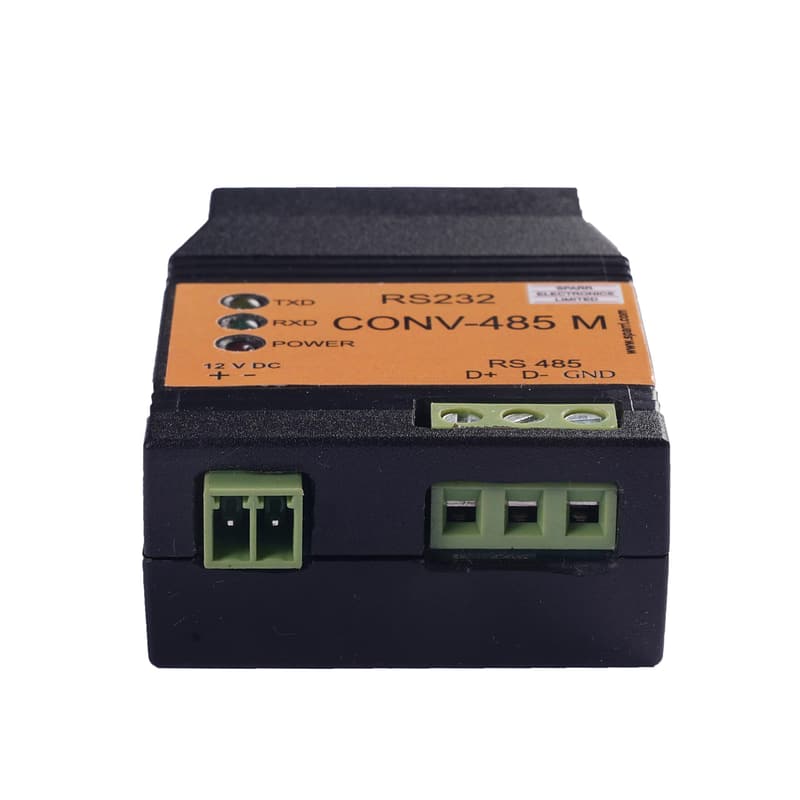
Sparr’s RS232 to RS485 Converter (CONV 485) is built around exactly this checklist — isolated, multi-drop rated, and housed in a compact enclosure for panel mounting. It’s part of our broader converter range, which also covers RS232-to-RS422, USB-to-serial, and Modbus-specific protocol converters for networks that need more than a straight RS232/RS485 bridge — see our Modbus RTU vs Modbus TCP guide if that’s your next question.
Getting it right the first time
The most common failure mode we see isn’t the converter itself — it’s skipping isolation to save cost, then chasing intermittent communication faults for weeks once the installation is live. If your RS232 device and the RS485 network it’s joining don’t share a power source, isolate the link. It’s cheaper than the troubleshooting.
Not sure which converter fits your setup? Send us your requirement and we’ll help you match it to the right part.